Sunday, November 25, 2012

Child Soldiers


Organizations such as the United Nations and UNICEF have not until recently entered the controversial topic of the child soldier epidemic. In a recent analysis, reports state that over 300,000 children seventeen and under are used as soldiers in more than seventy-five percent of the conflicts worldwide. According to the article, “Children at War” by P.W. Singer, almost eighty percent of the conflicts being currently fought which children participate in use children ages fourteen and under. Eighteen percent of these conflicts also use children ages twelve and under. Most of these 300,000 child soldier victims are forcefully recruited, abused and are subjected to the use of drugs.

            At the age of thirteen, Ishmael Beah, a former child soldier in the war driven country of Sierra Leone, was attacked in his village and was separated from his family members when they were killed. Ishmael along with several other children who survived the rebel attack on their village went to a military base for protection but instead they were “forcefully recruited.” Ishmael later said in the CBS interview that the soldiers at the military base threatened him with death if he didn’t join. In many third world countries particularly in parts of Asia and Africa, child soldiers are ideal for war because according to a military commander from Chad they, “Don’t complain, they don’t expect to be paid- and if you tell them to kill, they kill.” Some children are even sold into war by their parents for money while others are separated from their family and by last resort join a side in the war.

            Not only are boys recruited to fight but also girls. Unfortunately, many are subjected to all kinds of abuse including sexual abuse. Out of the armed forces that use child soldiers, thirty percent use girls as well as boys. Many girls  are given the duty of cooks or messengers. Often, these girls are the victims of sexual abuse such as rape by their own military commanders. Another kind of abuse inflicted upon child soldiers is emotional abuse. Like the military commander from Chad said, child soldiers will do anything you tell them to do. If they don’t then they’re faced with the consequence of death. In the Democratic Republic of the Congo child soldiers are forced to, “Burn down huts,” and “Pound newborn babies to death.” In the Palestinian area and in Israel children as young as eleven are used to smuggle explosives into different countries. Children being used as suicide bombers has become so frequent that some people have began to manufacture and sell children sized denim jackets used to conceal explosives.

        Killing was not easy for Ishmael Beah when he was first recruited. In order to cope with the enormous amount of trauma as a result of the war, Ishmael’s military commanders gave him drugs ranging from marijuana to brown-brown, a mixture of heroin and gunpowder or cocaine and gunpowder in order to “numb” himself. However, after the initial use of drugs and once addicted, military commanders would stop giving child soldiers drugs. Ishmael said in the interview, “You had to find them to take them yourself.” Child soldiers like Ishmael were forced to take drugs and then became addicted and would do anything to gain possession of the drugs.

            Although child soldiers have committed countless atrocious acts ranging from smuggling explosives to killing an innocent person in cold blood, one must remember that if they didn’t do these horrible things they would be killed. Ranging anywhere from ages five to seventeen, you can’t expect them to say no for an answer. These children are forcefully recruited, sold into the war, abused and are forced to use drugs. Therefore, child soldiers are victims and not perpetrators.  

Sunday, November 18, 2012

The Meaning of Life


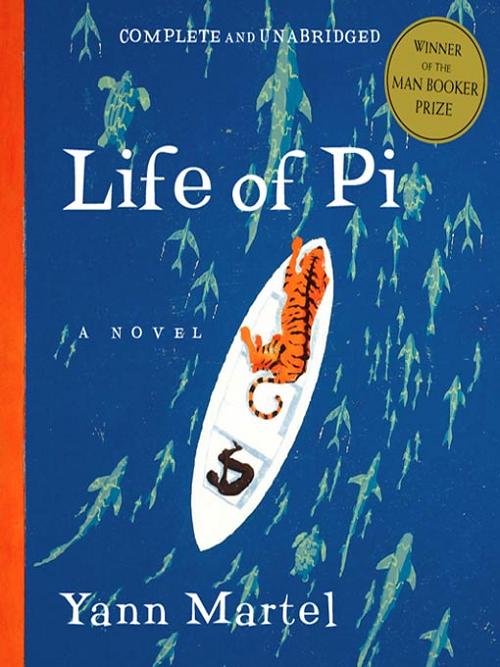
We meet many people over the course of our lives, some extremely inspirational while others disincentive. These are the people who shape our human character. For Pi Patel in the “Life of Pi” by Yann Martel however, it is more than just that. It is the meaning of life.

At a young age, Pi was mocked for his name. When he stood towards the wall many would say, “You’re facing the wall. Are you pissing?” Other times children would say, “Where’s Pissing? I’ve got to go.” The general reaction for many in this “flight” or “fight” situation would to respond and “fight” back. However Pi reacted by ignoring the harmful mocks, pretending that he never heard them. From what I’ve read so far in the beginning of the book Pi seems resilient and may be because of these people. Pi’s father was a zoo keeper and at an early age Pi bonded amongst the other animals. As a result of his inspirational father Pi later went into zoology.    

Although I have only started the book it seems to me that the meaning of life for Pi is to physically, mentally and spiritually grow with other people. Hopefully, as I continue to read the book I’ll find more examples of this.

Sunday, November 4, 2012

Love and Loneliness


As I continue to read the Harry Potter series by J.K. Rowling I come upon more and more themes. However, they always relate back to a particular subject matter, the backgrounds of the characters. In this case the theme was how did the backgrounds of the characters later affect their personality and ego. When I looked back into the books to find characters with interesting backgrounds, I wasn’t surprised how they turned out.

An interesting character with a very fascinating background was Tom Riddle who would later be known as Voldemort. Because he was seen as different by the other children at the orphanage where he spent his early childhood until he was taken to Hogwarts by Dumbledore, he was neglected and was often teased for his powers. Could it be that the taunting of Tom that turned him into a ruthless and cold-hearted killer? Or was it something deeper? Something so powerful that even a man who could kill another with the touch of his hand couldn’t live without. Could what caused Tom Riddle to become Voldemort be love?


Sunday, October 28, 2012

A Leader Who's Somewhat Of A Hot-Head

As a child your parents and family have the biggest affect on your character throughout the rest of your life. They are the most influential people you will ever encounter in my opinion. However, their influence can veer your development of character in the wrong direction. Harry, in Harry Potter by J.K. Rowling grows up with his step parents and of course Dudley. Harry is neglected and is treated horribly. This turns Harry in to what he is throughout the books.

Growing up, Harry was always told he couldn't do something. He was always told to stay in the cupboard. He was always told that a pair of old and worn socks was more than enough for his birthday present. Could it be that this sparked the leader and fiery temper in the Harry Potter that we see in later years? Maybe, after so many years of being told no that this was how Harry "wiped off" his emotions and feelings. To prove to his step parents and his awful cousin that he was a leader and that he would never be told that he was wrong. Is the reason for his leadership skills and choleric self all because of the influential power of his family? What do you think?

Sunday, October 21, 2012

A Dangerous Task

As I continue to read, The Giver, by Lois Lowry, Jonas and I the reader learn more and more about his utopia society. Things that he never would have known if it wasn't for his placement as the new Receiver of Memory, a very difficult and painful job that however, earns high honor in the community. However, some of the things that Jonas will learn will cause him to suffer just like the previous receiver.

At the ceremony where Jonas was given the responsibility as the new receiver, the elder told him that this was a very painful job. After a few lessons, Jonas asked, the giver, "What causes you pain?" The giver responded by saying, "Let's go once again to a hill, and a sled." Early in the book I learned that once yo reach a certain age in the community you are "released." I believe that the giver will show Jonas what happens after you are released. Death. I think that death is not accepted in the community because people would suffer. This is the pain Jonas will have to endure. However, I don't think that Jonas will be able to endure this and will flee from his community to "beyond the hills" that he expressed curiosity of.

Sunday, October 14, 2012

Freedom and Virtue

Imagine a small community where all the power lies in the hands of a few. Imagine that in the community everyone's life is already planned ahead. Your name, what you will receive for every single birthday, and even what job you'll have. There is no sickness, no issues whatsoever. Everything is perfect. Everything is perfect in this utopia community in which Jonas, an eleven year old boy has to experience in the book, The Giver by Lois Lowry. Although I have only read the first few chapters of the immaculate page turning book, the subject of the matter has already got me regarding the flaws of a utopia society.
When I first thought of utopia, I thought of no complaints. Everything would be perfect, therefore what's to complain about. However, as I continued reading the book and investigating Jonas' feelings toward his community I realized that I was wrong about a utopia society. Jonas has no freedom, no liberty. He does not get to make his own decisions for they are chosen for him by others. The only thing I could see as a positive about Jonas' community was that he's safe. Although safety is always important, in this case the more safety you have the less freedom you have.
We all make mistakes. It's part of being human. But it's okay because we all make mistakes. But most importantly we learn from these mistakes. In Jonas' community everything is perfect. No one make mistakes therefore he can't learn valuable life lessons that we learn from our faults. That's why freedom is so important. Without it we wouldn't know between wrong and right. As St. Thomas Aquinas once said, "freedom is the condition for the possibility of virtue."


Sunday, October 7, 2012

Spectrums and "Normal"


Over time society has discriminated against certain groups of people because of behaviors or characteristics that society doesn’t see as normal. One of these groups is homosexuals who are harassed to the extent of occasionally committing suicide. This is the issue Bruce Coville tackles in his short story, “Am I Blue?”, which is about a sixteen year old boy named Vincent who’s determining his sexuality with the help of his fairy godfather, Melvin. Vincent is uncomfortable facing the situation. He feels as though he would be in the unpopular minority if he was gay. Because of this he tries to hide the possibility that he might be gay from the people that view homosexuals differently. He tries to conform to what society sees as normal, to avoid discrimination, because he doesn’t realize until the end of the story that “normal” is a spectrum.

In the story Vincent tries to act like he’s straight when he’s still determining his sexuality. For example, after Vincent meets Melvin they decide to go to a café to discuss things over. When walking, Vincent notices that Melvin has a certain “swish” to his walk and says, “Do you have to walk like that?” Vincent is embarrassed being seen with a person that is openly gay and therefore tries not to be seen with Melvin. Another time Vincent tries to act straight or conform to society’s idea of normal is when Vincent and Melvin are in the café. Melvin begins to tell Vincent how he was killed by gay bashers, and that the reason for his visit was to make Vincent more comfortable with deciding his sexuality. However, right after, the atmosphere between Melvin and Vincent drastically shifts. Melvin, “leaned back in his chair, glanced around the room, then winked at a nice-looking college student sitting about five tables away from us.” Seeing this Vincent becomes suddenly anxious and  responded to Melvin’s action by saying in a firm tone, “Will you stop that!” Clearly, Vincent was “afraid of guilt by association” and did not want to be seen as homosexual. He was worried that if he did, he would be discriminated and possibly even gay bashed.

In the beginning of the story Vincent is baffled. He has mixed emotions about his sexuality. This is all before Melvin makes Vincent more comfortable with the idea that if he is gay he wouldn’t be alone. Melvin proves this to Vincent by giving him gaydar, which allows him to see gay people with blue faces. Astonishingly to Vincent he sees more people than he ever would have expected to be blue. This comforts Vincent into making him feel that he’s not alone.  In the end, Vincent realizes that one person may have one idea of normal and the other might have a completely different idea, but its ok because there is no one idea of normal.