Sunday, December 16, 2012

Hope, and Lots of It

In the past few books I've read such as the Life of Pi by Yann Martel, hope has become a reoccurring theme. For Pi, the main character in the book, hope came in the form of a Bengal Tiger, a whistle and a buoy. However, for Amir in The Kite Runner by Khaled Hosseini hope comes in a very different form.

Throughout the book Amir and his best friend Hassan are subjected to violence. For example, Hassan must endure through the slurs about his mother from soldiers scattered throughout Afghanistan. Amir is also occasionally neglected by his ignorant father, who repeatedly says behind Amir's back, "Why can't he be more like me?" The two boys constantly face many hardships yet they succeed in maintaining a spiritual mind and never lose hope. With hope, they gain courage and optimism that there will be a "brighter day" than before. But how is it that they keep hope with so much despair and difficulty in their lives? What benefits does anyone receive from hope? Is it purely what keeps people going; an idea that the next day will be better than the previous? As I continue to read, I look forward to revealing the true meaning of hope. In the mean time, what are your opinions and thoughts on it?

Sunday, December 9, 2012

The Kite Runner and What Makes a Book, Good

For most readers, a good piece of literature is one you can connect to. Whether it's the character or setting, most most people a book is much more enjoyable when you can say, "This I can connect to." However, after beginning to read The Kite Runner by Khaled Hosseini, I've began to re-analyze how a book becomes a good one in my opinion.

From what I've read so far, The Kite Runner is about two boys, Amir and Hassan, growing up in the third world country of Afghanistan in 1975. In the war driven country, Amir and Hassan must deal with violence, poverty and sexual abuse. None of which, am I able to connect to. Yet the compelling and gripping book has me turning pages after pages. In no way am I able to make a connection which drives me to read. So, I've reconsidered the etiquette of a good book. For one, description of the characters and settings is always in a well written book. It is the key behind what makes the "movie" in our head, continuous. For example, "The early-afternoon sun sparkled on the water where dozens of miniature boats sailed, propelled by a crisp breeze." Also, the book is extremely informative in all areas so you never get "bored." Although we rely on connections in books in order for it to be readable, there is much more than just this and finding these attributes is all worth wild.

Sunday, December 2, 2012

The Color Orange

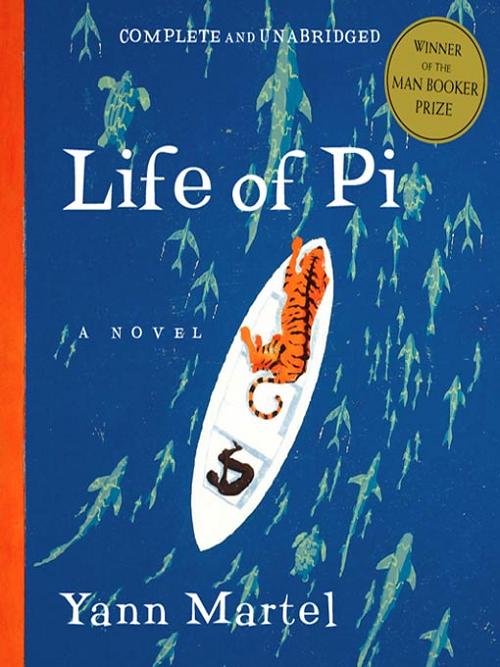
As Simon Van Booy, a British author once said so precisely, "Coincidences mean you're on the right path." Across the book, "The Life of Pi" by Yann  Martel, Pi comes along many items and, many animals. Afterall, his father is the owner of a zoo. However many of these are the color orange such as a tiger, a whistle and a buoy.  Is it just a coincidence that these things are orange or is it more? Maybe, it's a symbol.

The tiger, whistles and buoys are all orange and all have a potential to save Pi from the shipwreck (which they do because he does survive.) The tiger poses a threat to Pi, weighing several hundred pounds more than Pi, it probobly kill him with one strike. However, not only does the tiger pose a threat but also does the hyena and the orangutan. Potentially, the tiger could decrease the threat by killing the other two animals. Maybe this is how Pi survives. Maybe it is the tiger who helps Pi survive. On the life boat Pi also finds a few orange whistles attached to the many life jackets he finds. Along with the whistles he finds and a couple orange buoys. If a ship managed to come close to the life boat, Pi could signal to a boat. If the sea ever got to rough, maybe Pi used them for stability.

The color orange in the book symbolizes hope as seen by the tiger, whistles and buoys. But it also symbolizes something else. After Pi is rescued, which I don't know how yet, he moves to Canada where he starts a family. He also adopts an orange cat. Maybe the cat symbolizes survival and the hardships Pi had to face.

Sunday, November 25, 2012

Child Soldiers


Organizations such as the United Nations and UNICEF have not until recently entered the controversial topic of the child soldier epidemic. In a recent analysis, reports state that over 300,000 children seventeen and under are used as soldiers in more than seventy-five percent of the conflicts worldwide. According to the article, “Children at War” by P.W. Singer, almost eighty percent of the conflicts being currently fought which children participate in use children ages fourteen and under. Eighteen percent of these conflicts also use children ages twelve and under. Most of these 300,000 child soldier victims are forcefully recruited, abused and are subjected to the use of drugs.

            At the age of thirteen, Ishmael Beah, a former child soldier in the war driven country of Sierra Leone, was attacked in his village and was separated from his family members when they were killed. Ishmael along with several other children who survived the rebel attack on their village went to a military base for protection but instead they were “forcefully recruited.” Ishmael later said in the CBS interview that the soldiers at the military base threatened him with death if he didn’t join. In many third world countries particularly in parts of Asia and Africa, child soldiers are ideal for war because according to a military commander from Chad they, “Don’t complain, they don’t expect to be paid- and if you tell them to kill, they kill.” Some children are even sold into war by their parents for money while others are separated from their family and by last resort join a side in the war.

            Not only are boys recruited to fight but also girls. Unfortunately, many are subjected to all kinds of abuse including sexual abuse. Out of the armed forces that use child soldiers, thirty percent use girls as well as boys. Many girls  are given the duty of cooks or messengers. Often, these girls are the victims of sexual abuse such as rape by their own military commanders. Another kind of abuse inflicted upon child soldiers is emotional abuse. Like the military commander from Chad said, child soldiers will do anything you tell them to do. If they don’t then they’re faced with the consequence of death. In the Democratic Republic of the Congo child soldiers are forced to, “Burn down huts,” and “Pound newborn babies to death.” In the Palestinian area and in Israel children as young as eleven are used to smuggle explosives into different countries. Children being used as suicide bombers has become so frequent that some people have began to manufacture and sell children sized denim jackets used to conceal explosives.

        Killing was not easy for Ishmael Beah when he was first recruited. In order to cope with the enormous amount of trauma as a result of the war, Ishmael’s military commanders gave him drugs ranging from marijuana to brown-brown, a mixture of heroin and gunpowder or cocaine and gunpowder in order to “numb” himself. However, after the initial use of drugs and once addicted, military commanders would stop giving child soldiers drugs. Ishmael said in the interview, “You had to find them to take them yourself.” Child soldiers like Ishmael were forced to take drugs and then became addicted and would do anything to gain possession of the drugs.

            Although child soldiers have committed countless atrocious acts ranging from smuggling explosives to killing an innocent person in cold blood, one must remember that if they didn’t do these horrible things they would be killed. Ranging anywhere from ages five to seventeen, you can’t expect them to say no for an answer. These children are forcefully recruited, sold into the war, abused and are forced to use drugs. Therefore, child soldiers are victims and not perpetrators.  

Sunday, November 18, 2012

The Meaning of Life


We meet many people over the course of our lives, some extremely inspirational while others disincentive. These are the people who shape our human character. For Pi Patel in the “Life of Pi” by Yann Martel however, it is more than just that. It is the meaning of life.

At a young age, Pi was mocked for his name. When he stood towards the wall many would say, “You’re facing the wall. Are you pissing?” Other times children would say, “Where’s Pissing? I’ve got to go.” The general reaction for many in this “flight” or “fight” situation would to respond and “fight” back. However Pi reacted by ignoring the harmful mocks, pretending that he never heard them. From what I’ve read so far in the beginning of the book Pi seems resilient and may be because of these people. Pi’s father was a zoo keeper and at an early age Pi bonded amongst the other animals. As a result of his inspirational father Pi later went into zoology.    

Although I have only started the book it seems to me that the meaning of life for Pi is to physically, mentally and spiritually grow with other people. Hopefully, as I continue to read the book I’ll find more examples of this.

Sunday, November 4, 2012

Love and Loneliness


As I continue to read the Harry Potter series by J.K. Rowling I come upon more and more themes. However, they always relate back to a particular subject matter, the backgrounds of the characters. In this case the theme was how did the backgrounds of the characters later affect their personality and ego. When I looked back into the books to find characters with interesting backgrounds, I wasn’t surprised how they turned out.

An interesting character with a very fascinating background was Tom Riddle who would later be known as Voldemort. Because he was seen as different by the other children at the orphanage where he spent his early childhood until he was taken to Hogwarts by Dumbledore, he was neglected and was often teased for his powers. Could it be that the taunting of Tom that turned him into a ruthless and cold-hearted killer? Or was it something deeper? Something so powerful that even a man who could kill another with the touch of his hand couldn’t live without. Could what caused Tom Riddle to become Voldemort be love?


Sunday, October 28, 2012

A Leader Who's Somewhat Of A Hot-Head

As a child your parents and family have the biggest affect on your character throughout the rest of your life. They are the most influential people you will ever encounter in my opinion. However, their influence can veer your development of character in the wrong direction. Harry, in Harry Potter by J.K. Rowling grows up with his step parents and of course Dudley. Harry is neglected and is treated horribly. This turns Harry in to what he is throughout the books.

Growing up, Harry was always told he couldn't do something. He was always told to stay in the cupboard. He was always told that a pair of old and worn socks was more than enough for his birthday present. Could it be that this sparked the leader and fiery temper in the Harry Potter that we see in later years? Maybe, after so many years of being told no that this was how Harry "wiped off" his emotions and feelings. To prove to his step parents and his awful cousin that he was a leader and that he would never be told that he was wrong. Is the reason for his leadership skills and choleric self all because of the influential power of his family? What do you think?