Sunday, January 27, 2013

Crank: Why Poetry?


Ellen Hopkin's book, Crank, is about how Kristina, better known as Bree, is taken into the world of drugs such as Methamphetamine. As a result, relationships are broken and others are made. The book is written in poetry, which is normally used as a way to express feelings or emotions. As a result of the story written in poetry, certain aspects are found in the book that you wouldn't be able to find in one without poetry.

When poetry and dialogue are combined, it's much more interesting than in a regular book. For example, at one point Kristina is talking to her boyfriend Adam, in her dad's hometown. "Hello?" "Hey gorgeous I miss you." Melted butter. Usually after each set of dialogue from the characters there is a description of an object that symbolizes how Kristina is feeling. Just from reading the dialogue one wouldn't really be able to interpret the emotions of a character. Writing in the form of poetry also allows the reader to show the two sides of a character, in this case Kristina and Bree. For example, "For a while, without the monster whispering sweet and terrible nothings, Kristina was still in charge. But Bree was watching."

All in all, reading this book has allowed me to see new writing techniques that I may be able to use in future writing. I would highly recommend this to anyone seeking an intense and emotional book about drug addiction.

Monday, January 21, 2013

Crank: A Midway Review

*SPOILERS
I have recently reached the midway point, or climax of Crank by Ellen Hopkins and . So far, Kristina has become fully familiar and adequate of the benefits of meth. However, when sober she realizes what horrible mess she's gotten herself into and regrets her actions. Ironically, it seems to me that she is anxious for more of Bree and crank. After promising Adam, who cheated on his girlfriend to be with Kristina, to return back to her father's hometown, Kristina leaves and visits her mother. However, her addiction continues with Meth in Nevada where she begins to date another boy named Chase.

After reading well into the book, I can say that this is one of my favorite brutal, gory, and remarkable drug addicting books thus far. The story has an interesting flow due to the poem-shaped writing causing the reader the turn the pages quickly. Although at times, the writing can be vague and tedious, the story quickly picks up again through fast and exhilarating dialogue. Overall, I think the book is extremely well written and proves to be an aspiring winner of any young-adult medals.

Sunday, January 13, 2013

Kristina, "Crank", and Bree


Kristina is a perfect example of someone who's trying to get by in life. She's a student in high school, has decent grades and a moderate amount of friends. However, all goes downhill when her mother begins dating another man, and she must live with her drug-addicted father who she hasn't in over eight years. This is where she is introduced to "Crank", the monster, Methamphetamine. This is where, "Bree", Kristina's alter-ego enters her world.

Of course there are endless possible outcomes when a character is influenced by drugs. For example, Kristina could suddenly realize her mistake of getting involved, and therefore take actions to correct this through rehabilitation. However, she could spiral into the world of addiction and follow her father’s footsteps as an impulsive being. From looking at certain characteristics of Kristina, I have a feeling that her future might turn out for the worst. For example, from what I’ve read so far Kristina seems like an innocent and shy person that could easily get caught up in the havoc of drugs. In a way, she also seems like someone who’s lost interest in everything and as a result turns to drugs. Hopefully, we’ll find out as I continue to read the book.

Sunday, January 6, 2013

Tweak: A True Memoir of Addiction and The Battle


Recently, I have begun reading Tweak, by Nic Sheff. The book is a personal memoir about how Nic deals with his addiction to several drugs including Methamphetamines, Cannabis, and Heroin. It also shows the effects of drugs not only on the abusers physical and mental state but also on the friends and families. Nic receives most of his drugs through his drug addicted friends, and continues to use so many until he finds the one that will give him that “first high.” However what I find interesting in the book is that at certain times Nic will try to get himself clean, yet he doesn’t push himself to do so, and continues his extreme drug addiction.

I don’t have firsthand knowledge of how hard it is to become unaddicted from any drug and hope to keep it that way, but if Nic really wanted to pursue his dreams of becoming a bestselling author (which he does) I think that he could have done this long before. From what I read so far in the book, it seems 100% possible for anyone to get off drugs. However, it’s just a matter of how much they want to succeed in their passion and life. Nic always talks about his writing to his friends and how one day he’ll be famous. But it’s also a matter of saying something from doing something. As I continue to read, I’ll be extremely interested to see how Nic pushes himself to reach is goal as a writer.

Sunday, December 16, 2012

Hope, and Lots of It

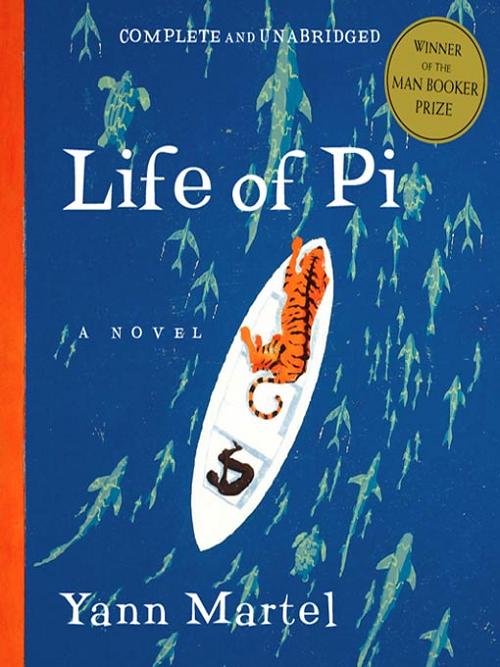
In the past few books I've read such as the Life of Pi by Yann Martel, hope has become a reoccurring theme. For Pi, the main character in the book, hope came in the form of a Bengal Tiger, a whistle and a buoy. However, for Amir in The Kite Runner by Khaled Hosseini hope comes in a very different form.

Throughout the book Amir and his best friend Hassan are subjected to violence. For example, Hassan must endure through the slurs about his mother from soldiers scattered throughout Afghanistan. Amir is also occasionally neglected by his ignorant father, who repeatedly says behind Amir's back, "Why can't he be more like me?" The two boys constantly face many hardships yet they succeed in maintaining a spiritual mind and never lose hope. With hope, they gain courage and optimism that there will be a "brighter day" than before. But how is it that they keep hope with so much despair and difficulty in their lives? What benefits does anyone receive from hope? Is it purely what keeps people going; an idea that the next day will be better than the previous? As I continue to read, I look forward to revealing the true meaning of hope. In the mean time, what are your opinions and thoughts on it?

Sunday, December 9, 2012

The Kite Runner and What Makes a Book, Good

For most readers, a good piece of literature is one you can connect to. Whether it's the character or setting, most most people a book is much more enjoyable when you can say, "This I can connect to." However, after beginning to read The Kite Runner by Khaled Hosseini, I've began to re-analyze how a book becomes a good one in my opinion.

From what I've read so far, The Kite Runner is about two boys, Amir and Hassan, growing up in the third world country of Afghanistan in 1975. In the war driven country, Amir and Hassan must deal with violence, poverty and sexual abuse. None of which, am I able to connect to. Yet the compelling and gripping book has me turning pages after pages. In no way am I able to make a connection which drives me to read. So, I've reconsidered the etiquette of a good book. For one, description of the characters and settings is always in a well written book. It is the key behind what makes the "movie" in our head, continuous. For example, "The early-afternoon sun sparkled on the water where dozens of miniature boats sailed, propelled by a crisp breeze." Also, the book is extremely informative in all areas so you never get "bored." Although we rely on connections in books in order for it to be readable, there is much more than just this and finding these attributes is all worth wild.

Sunday, December 2, 2012

The Color Orange

As Simon Van Booy, a British author once said so precisely, "Coincidences mean you're on the right path." Across the book, "The Life of Pi" by Yann  Martel, Pi comes along many items and, many animals. Afterall, his father is the owner of a zoo. However many of these are the color orange such as a tiger, a whistle and a buoy.  Is it just a coincidence that these things are orange or is it more? Maybe, it's a symbol.

The tiger, whistles and buoys are all orange and all have a potential to save Pi from the shipwreck (which they do because he does survive.) The tiger poses a threat to Pi, weighing several hundred pounds more than Pi, it probobly kill him with one strike. However, not only does the tiger pose a threat but also does the hyena and the orangutan. Potentially, the tiger could decrease the threat by killing the other two animals. Maybe this is how Pi survives. Maybe it is the tiger who helps Pi survive. On the life boat Pi also finds a few orange whistles attached to the many life jackets he finds. Along with the whistles he finds and a couple orange buoys. If a ship managed to come close to the life boat, Pi could signal to a boat. If the sea ever got to rough, maybe Pi used them for stability.

The color orange in the book symbolizes hope as seen by the tiger, whistles and buoys. But it also symbolizes something else. After Pi is rescued, which I don't know how yet, he moves to Canada where he starts a family. He also adopts an orange cat. Maybe the cat symbolizes survival and the hardships Pi had to face.